
CWDM Mux/Demux: A Strategic Guide for IT Managers
As data demands grow, IT leaders are constantly asked to do more with less—more bandwidth, more services, more reliability, all while minimizing costs and disruption. If your organization is bumping up against the limits of existing fiber infrastructure, CWDM Mux/Demux technology offers a strategic, scalable, and cost-effective solution.
This guide will walk you through the core concepts of CWDM, its business value, use cases, implementation considerations, and how to future-proof your network using this passive optical technology.
- What is CWDM and Why Should IT Care?
- Key Specs of CWDM
- What is a Mux/Demux Box?
- Business Benefits for IT Management
- Strategic Use Cases
- Implementation Tips for IT Managers
- CWDM v DWDM
- Final Thoughts
What Is CWDM and Why Should IT Care?
CWDM (Coarse Wavelength Division Multiplexing) is a fiber-optic multiplexing technology that increases the capacity of a single fiber by transmitting multiple signals on different wavelengths (colors of light). These signals travel simultaneously over the same fiber without interfering with each other.
.jpg)
Key Specs of CWDM:
Supports up to 18 wavelengths (typically spaced 20 nm apart)
Operates in the range of 1270–1610 nm
Each wavelength can carry up to 100G, depending on the optics
Passive: Requires no electrical power or active switching
What Is a Mux/Demux Box?
A CWDM Mux/Demux box is a passive optical device used in pairs—one at each end of the fiber link.
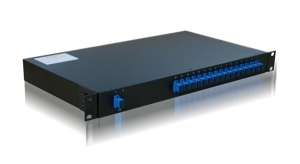
The Multiplexer (Mux) combines multiple input signals (each on a separate wavelength) onto a single fiber.
The Demultiplexer (Demux) separates the combined signal back into individual channels at the receiving end.
CWDM Mux/Demux boxes come in various configurations, such as 4, 8, or 16-channel units, depending on how many signals you need to carry.
Business Benefits for IT Management
1. Infrastructure Efficiency
CWDM allows you to scale network bandwidth without installing new fiber—a process that can be time-consuming, costly, and subject to approvals delays. This is especially beneficial in urban areas, legacy buildings, or leased fiber environments.
2. Significant Cost Savings
Compared to DWDM, CWDM components are more affordable. The spacing between wavelengths is wider, which allows for cheaper and less complex optical components. No power or cooling is needed for the Mux/Demux boxes, reducing both CapEx and OpEx.
3. Simplified Operations
CWDM systems are plug-and-play. Since they are passive and protocol-agnostic, they integrate easily with existing Ethernet, Fibre Channel, or SONET/SDH equipment. There’s no need to overhaul your current infrastructure.
4. Scalable Growth
CWDM supports gradual scaling. Start with two or four channels and add more wavelengths later as demand increases—without disrupting services or running new cables.
5. Security & Segmentation
Each wavelength can be used for separate traffic types or departments, offering natural data separation. This is ideal for environments requiring strict segmentation, such as healthcare, finance, or multi-tenant campuses.
Strategic Use Cases
Campus Networks
Link multiple buildings using a single fiber pair, each carrying multiple high-speed links (e.g., internet, VoIP, surveillance, access control). CWDM eliminates the need for extra trenching or leased circuits.
Data Center Interconnect (DCI)
Connect remote data centers for high-speed backup, replication, and failover. CWDM allows for aggregation of 1G/10G/25G/100G links on a single fiber—ideal for hybrid or edge data center strategies.
Video Surveillance Systems
Aggregate HD video feeds from multiple locations over one fiber return path—especially useful for smart campuses, airports, or large industrial facilities.
Telecom and Metro Ethernet
CWDM is widely used by ISPs and telecoms to deliver services to multiple customers over shared fiber infrastructure. It also supports last-mile bandwidth expansion for enterprise clients.
Implementation Tips for IT Managers
Assess Your Fiber Inventory
Start by auditing your existing fiber assets. Many organizations have “dark fiber” or underutilized strands—perfect candidates for CWDM deployment.
Plan Your Wavelengths
Map out your wavelengths in advance. Avoid overlap and keep a record of which service uses which channel. A typical CWDM system supports up to 18 channels (though 8 or 16-channel deployments are most common).
Choose Compatible Optics
Use SFP/SFP+ transceivers that match your wavelength plan. Many vendors offer hot-swappable CWDM optics that fit directly into your existing switches or routers.
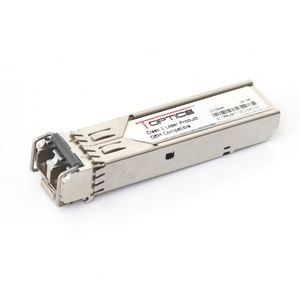 | 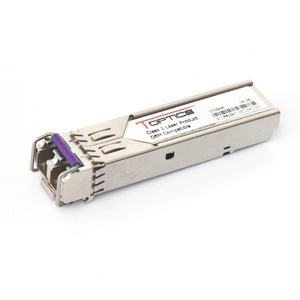 | 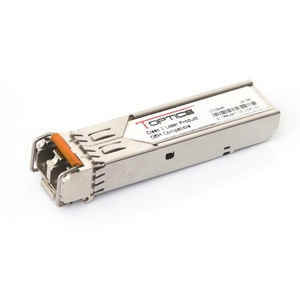 | 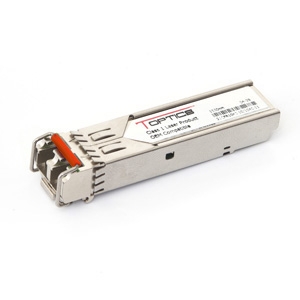 | 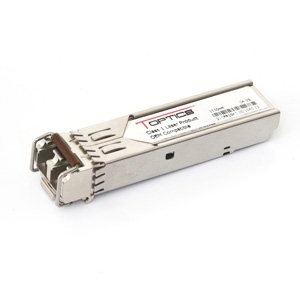 |
| 1470nm | 1490nm | 1570nm | 1590nm | 1610nm |
Test & Label Everything
Proper labeling and documentation are critical. Use a CWDM power meter or wavelength identifier during setup to ensure correct signal routing and detect issues early.
Build for Growth
Even if you're only using a few channels today, deploy Mux/Demux boxes that support more. That way, adding capacity in the future is as easy as plugging in new transceivers.
CWDM vs DWDM: A Quick Comparison
| Feature | CWDM | DWDM |
|---|---|---|
| Wavelength Count | Up to 18 | 40–96 (or more) |
| Channel Spacing | 20 nm | 0.8–0.4 nm |
| Typical Range | < 80 km (with no amplification) | > 80 km (amplification possible) |
| Cost | Lower | Higher |
| Complexity | Simple | Complex (requires power, cooling) |
| Use Case | Enterprise, campus, metro | Long-haul, backbone networks |
Final Thoughts: CWDM as a Smart Investment
For IT managers tasked with growing networks on fixed budgets, CWDM Mux/Demux offers a rare win-win: you can increase capacity, reduce infrastructure spend, and future-proof your environment—all without major changes to your existing systems.
Whether you’re dealing with campus interconnects, expanding data center links, or simply trying to get more mileage from your fiber investment, CWDM is a powerful tool to have in your strategic toolkit.
Take a look at some of our CWDM Mux/Demux devices now.
Need help designing or pricing out a CWDM deployment? Let's discuss your goals and build a roadmap that makes sense for your network and your budget.
Why not take advantage of a 5% discount on your project requirements too?